
Living Desert Heirlooms
Conserving Watarrka’s unique plant heritage
Watarrka National Park is home to an extraordinary diversity of plants, including rare, endemic and poorly known species found nowhere else. They are an essential part of the living heritage of this place.
Our Living Desert Heirlooms project is working with Aṉangu ngurraritja, park partners and botanical specialists to safeguard this unique botanical heritage for generations to come.
A desert landscape of remarkable plants
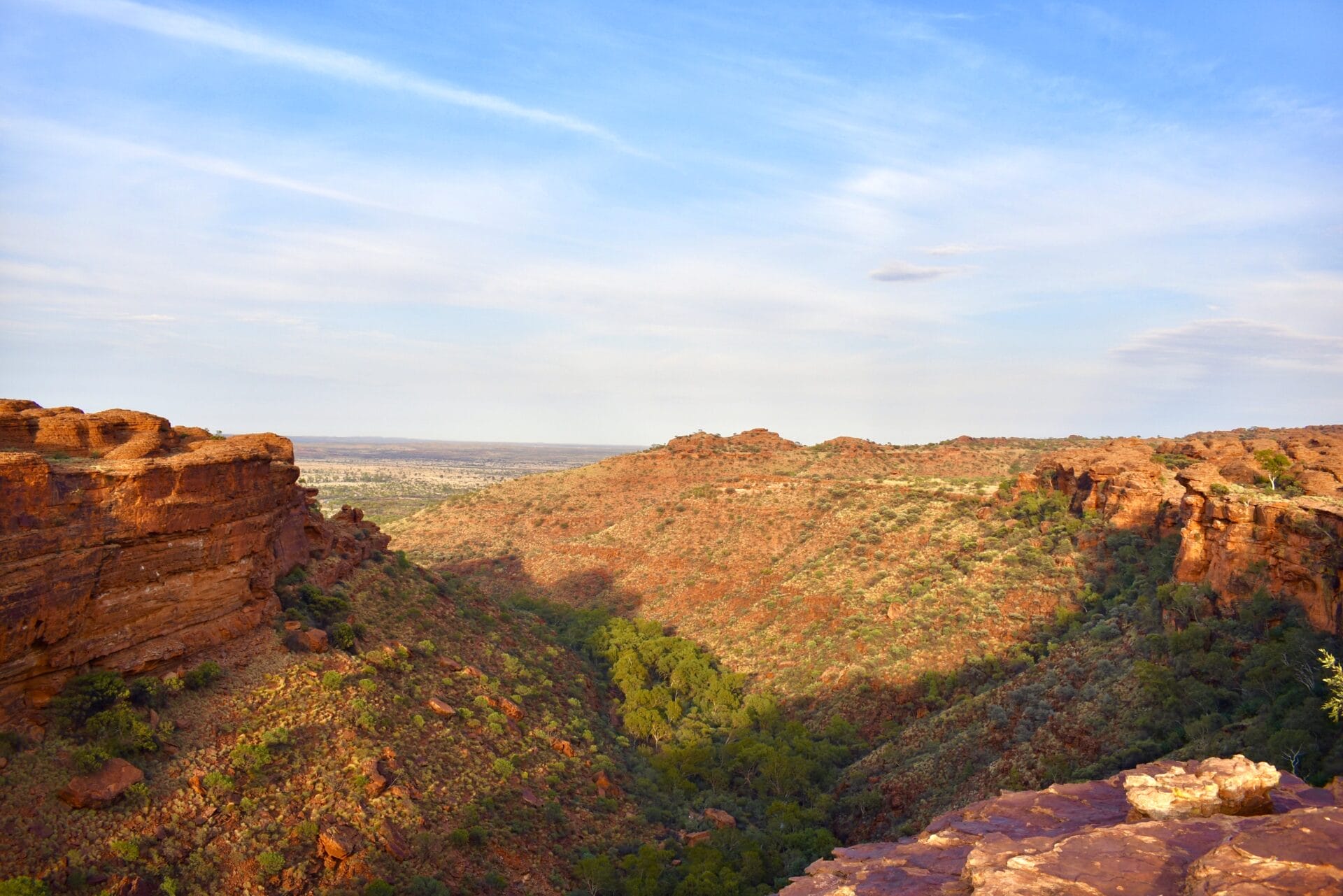
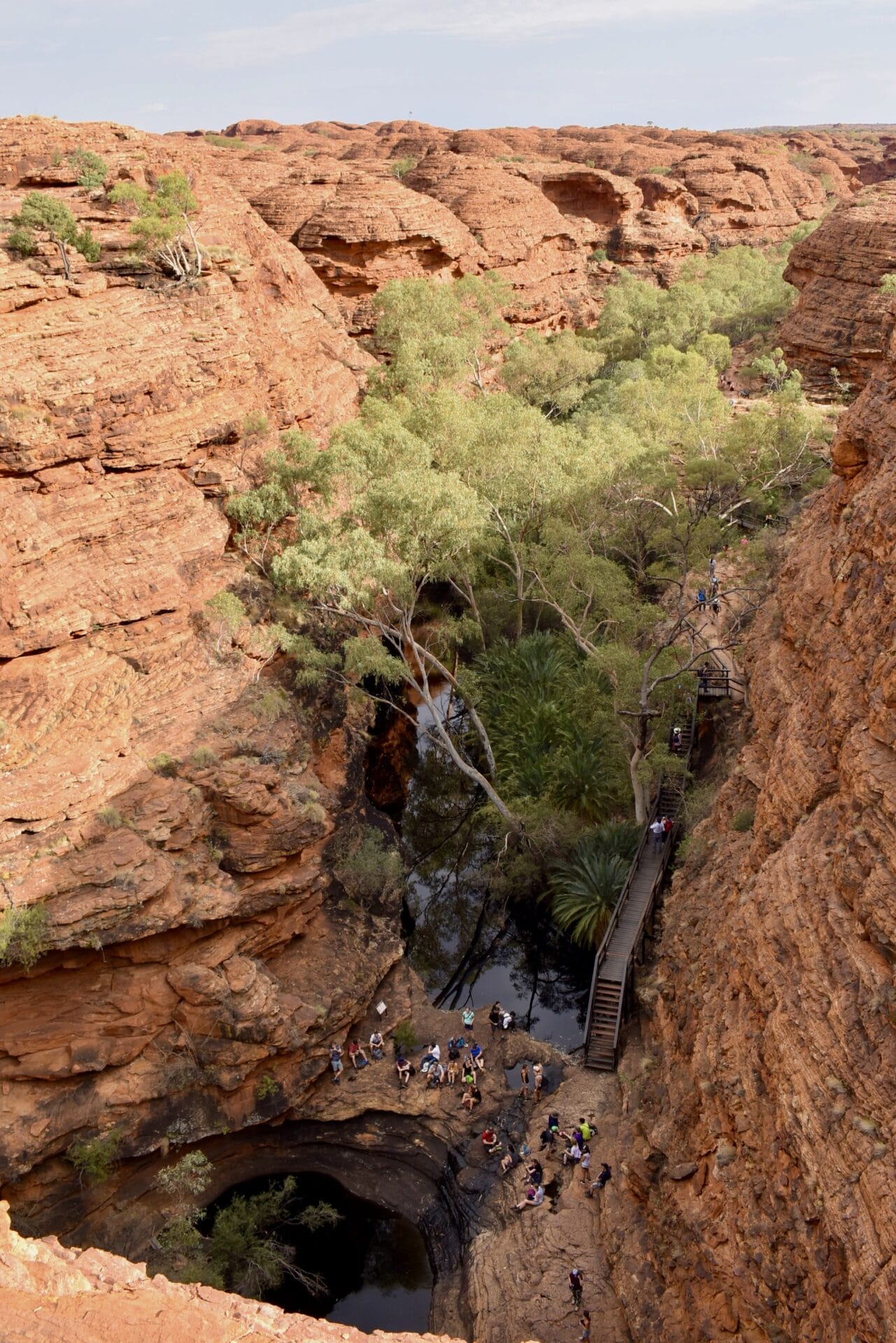
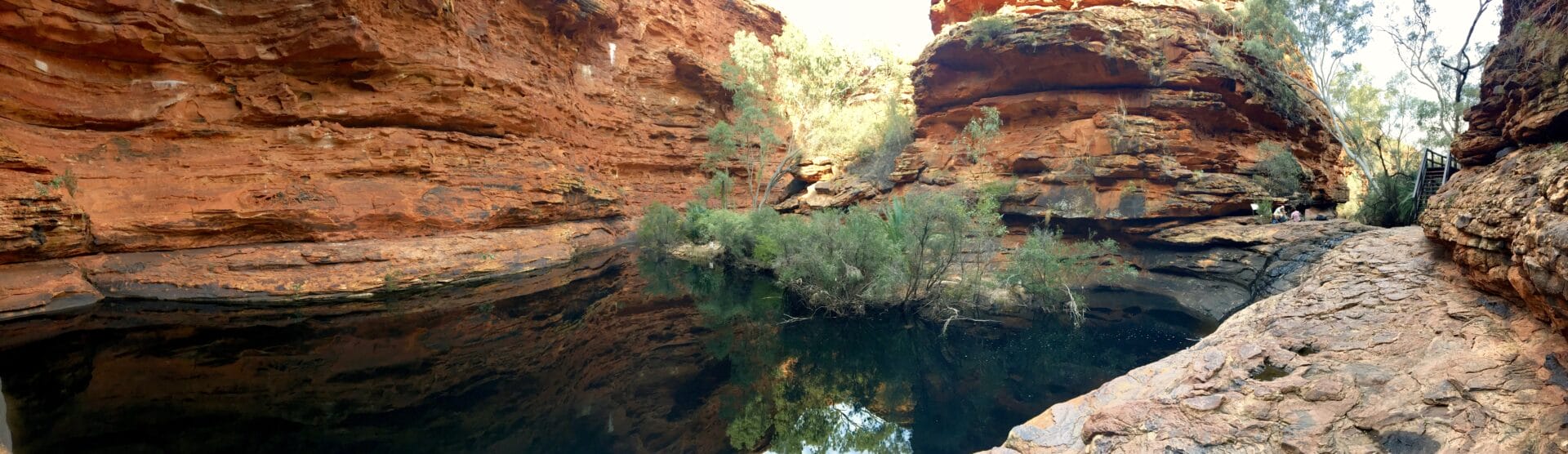
Watarrka’s sandstone cliffs, gorges, springs and sheltered habitats provide refuge for an extraordinary diversity of plants
A place of outstanding national heritage
Watarrka was added to the National Heritage List in 2024 in recognition of its exceptional plant related values
Criterion A
Watarrka supports important endemic, relict and geographically disjunct flora.
Criterion B
The region is home to many rare, threatened and poorly known plant species.
Criterion C
Its flora provides opportunities to research arid-zone ecology and climate resilience.
Criterion E
Watarrka’s aesthetic landscapes and lush vegetation contrast with the surrounding desert.
Criterion D
The Park is recognised as one of the most important sites for plant conservation in Central Australia.
Criterion I
Plants are inseparable from the living cultural landscape for Aṉangu ngurraritja.
A changing future
Wildfire, Buffel grass and introduced animals continue to affect the park’s flora. Some of Watarrka’s rare and threatened plants are also poorly understood and have little or no representation in conservation collections.
This is where Living Desert Heirlooms comes in.
Living Desert Heirlooms project
Between 2026–28, we will work to safeguard some of Watarrka’s most rare, endemic and culturally significant plants. The project will aslo provide training in practical conservation skills to strengthen First Nations participation in caring for Country.
Work with Aṉangu ngurraritja to identify cultural and conservation priorities to shape the project
Locate target flora and take herbarium specimens to improve plant knowledge for research and monitoring
Secure seed from rare, threatened, endemic and culturally significant plant species
Train Indigenous rangers and nursery staff in surveys, seed collection and storage.
Clean, process & store seed in conservation seed banks.
Unlock germination requirements so plants can be grown when needed for future conservation.
Create resources that help people understand and conserve Watarrka’s botanical and cultural heritage.
Follow our journey
Over the next two years, we’ll be sharing the project outcomes, highlights and information on the important plants of this region. Check back soon for more.
Recent news
Conservation is a team effort
This project is coordinated by the Australian Seed Bank Partnership and delivered by our key partners
Alice Springs Desert Park
Department of Tourism and Hospitality

Northern Territory Herbarium
Department of Lands, Planning and Environment
National Seed Bank
Australian National Botanic Gardens
We acknowledge Watarrka is a living cultural landscape for Aṉangu ngurraritja. Plants, animals, waters, rocks and people are connected through Tjukurrpa, and Traditional Owners continue to care for Country through cultural knowledge, practice and responsibility.
This project will be co-designed with Traditional Owners through the park’s Joint Management Committee and the Central Land Council, following appropriate cultural protocols and knowledge sharing, and embedding collaboration into its delivery.
This project was funded by the Australian Government under the Australian Heritage Grants Program.