Seeding Connection: Bridging knowledge, policy and practice across agriculture and conservation
Thanks for attending ASSC25
On behalf of the Organising and Program Committees, thank you for sowing the seeds of success at the Australasian Seed Science Conference in Horsham, Victoria. Your participation helped cultivate a vibrant exchange of ideas, and we’re grateful to everyone who gave their time and energy into making this event flourish. A special thanks goes to our program speakers and chairpersons, whose insights helped germinate new ideas, and to our sponsors and exhibitors, whose support was the fertile ground beneath it all.
Hosted by the Australian Seed Bank Partnership and the Australian Grains Genebank, the ASSC2025 was a leading conference exploring research and innovation across the agricultural and biodiversity conservation sectors. This conference provided a platform for Australasian seed researchers, industries, policymakers, and communities to promote research, insights, technologies, and exchange ideas on how we can address similar scientific, legal and policy challenges. Our collective efforts saw us welcome over 170 delegates to Horsham, including 30 Traditional Owners and First Nations organisation delegates, 9 delegates from the Asia- Pacific, as well as 30 students and EMCR’s.
We can’t wait to see you at the next one!
Dr Kathryn Eyles and Dr Sally Norton Organising Committee Co-Chairs
Dr Kathryn Eyles
Dr Sally Norton
Presented by
Themes
The theme for this conference was “Seeding Connection: Bridging knowledge, policy and practice across Agriculture and Conservation”.
Our conference centred around four sub-themes that have been designed to capture the international, national and regional knowledge across seed science research, policy, management practice, and use of genetic resources that encapsulate the impacts of climate change, technological advancements, legal frameworks, and partnerships for agricultural and environmental sustainability.
Seeds in culture and society
Exploring Indigenous perspectives, initiatives and enterprises; collaboration through partnerships; and protocols, legal frameworks and policies related to the conservation, restoration, collection, distribution and use of native biodiversity for food, agriculture and forestry.
Seed sourcing and end use
Exploring what factors affect seed sourcing and supply, and how advances in technologies and targeted strategies can maximise genetic diversity and guide applications in biodiversity conservation, restoration and grain crop production.
Seed biology and ecology
Exploring research, including the use of technologies, that provide insights into genetic diversity, seed storage behaviour, germination strategies and biological function of genetic resources to better understand seed ecology, seed microbiome, ‘difficult to germinate’ species, plant population dynamics and adaptation to advance agricultural productivity, restoration and conservation sectors.
Seed and gene bank management
Exploring how innovations, genomic and digital technologies, and data systems, methods and practices are being used to bank orthodox and non-orthodox taxa, improve seed quality and longevity, understand genetic diversity, and increase the utility of international, national and community gene banks for biodiversity conservation, agricultural crop improvement, and forestry applications.
Keynote Speakers
Dr Aisyah Faruk
Opening session
Mr Jacob Birch
Seeds in culture and society theme
Dr Paul Gibson-Roy
Seeds sourcing and end use theme
Prof Mathew G. Lewsey
Seed biology and ecology theme
Dr Fiona Hay
Seed & gene bank management theme
Resources
Explore our conference materials below, and stay tuned for special issue publications in the near future.
The Conference Committees would like to thank the following sponsors for their generous support
Gold Partners
The Council of Heads of Australian Botanic Gardens Incorporated is a not-for-profit organisation dedicated to supporting the protection, conservation and enhancement of Australian plants and their ecosystems.
The Australian National Botanic Gardens is a place for recreation, inspiration, conservation, science and learning. The Gardens makes a substantial contribution to conservation of Australian native plants. We work with a range of partner organisations to conduct diverse research into Australian plants and ecosystems.
Bronze Partners
Royal Botanic Gardens Victoria leads globally in botanical science, researching and conserving plant and fungal biodiversity. Its experts discover species, assess ecosystems, and protect threatened flora and fungi. Through seed banking and global collaborations, the Gardens provides vital knowledge to address climate change, extinction, and ensure a thriving future for biodiversity.
Greening Australia is a proudly independent environmental enterprise. We are a national not-for-profit committed to restoring Australia’s diverse landscapes and protecting biodiversity in ways that benefit communities, economies, and nature. We apply a science-led, collaborative approach to deliver nature-based solutions addressing the twin crises of climate change and biodiversity loss.
The Grains Research & Development Corporation (GRDC) invests in world-class research, development and extension to drive enduring profitability and sustainability for Australian grain growers. Funded by grower levies and the Australian Government, GRDC supports innovation across 25 grain crops, delivering long-term benefits for growers, industry, and the wider community.
Other sponsors
The International Plant Phenotyping Network is sponsoring a conference workshop, the ‘Seed and gene bank management’ plenary theme, attendance for Keynote Speaker Dr Fiona Hay, and a tea break.
The NSW Department of Climate Change, Energy, the Environment and Water is supporting attendance for Keynote speaker Dr Paul Gibson-Roy.
The Millennium Seed Bank Partnership is sponsoring the attendance for Keynote Speaker Dr Aisyah Faruk
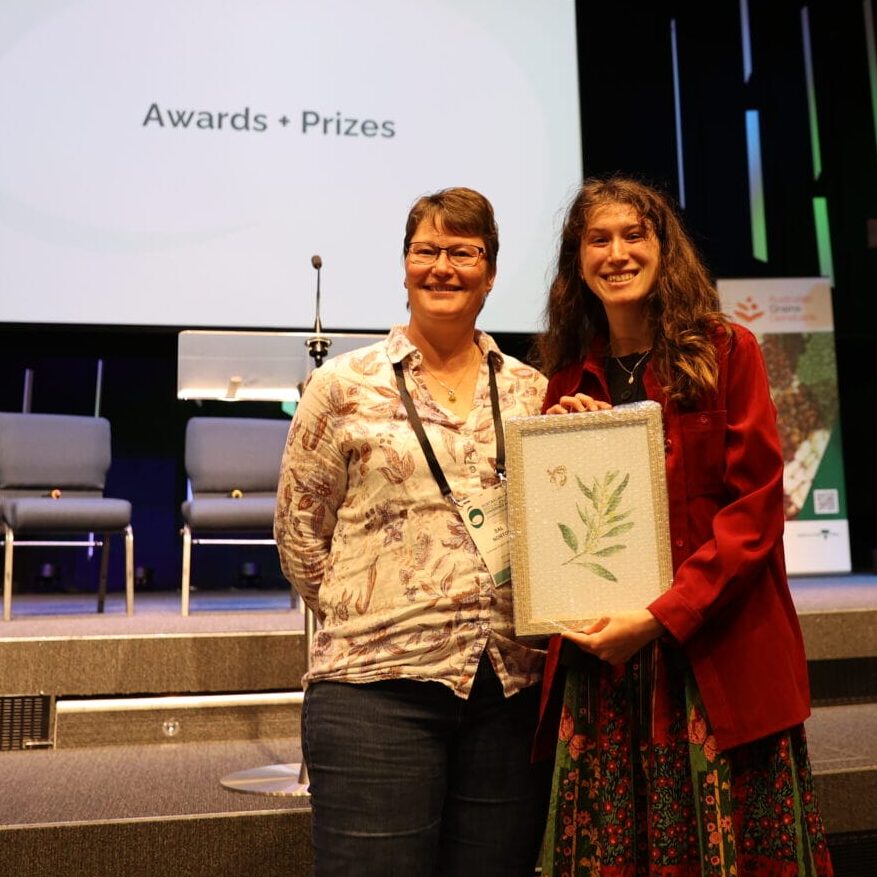
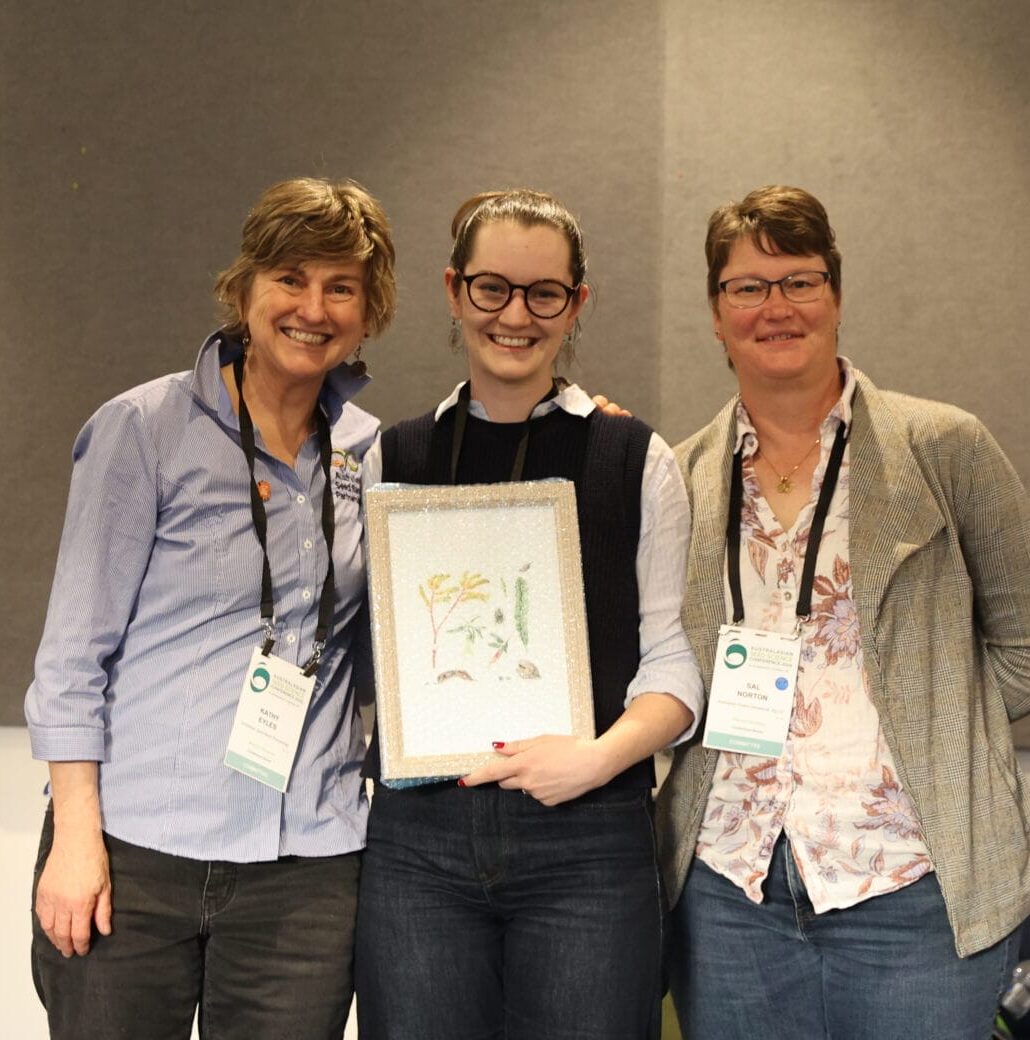
Angharad Dean is an Artist in Residence at the University of Tübingen in Germany. She has provided prints of her art as conference gifts.
NRMjobs have once again supported us by publicising our event through their established network of environmental professionals and students.
Wimmera CMA is supporting attendance for Keynote speaker Dr Paul Gibson-Roy.
Exhibitors
Royal Botanic Gardens Victoria leads globally in botanical science, researching and conserving plant and fungal biodiversity. Its experts discover species, assess ecosystems, and protect threatened flora and fungi. Through seed banking and global collaborations, the Gardens provides vital knowledge to address climate change, extinction, and ensure a thriving future for biodiversity.
Greening Australia is a proudly independent environmental enterprise. We are a national not-for-profit committed to restoring Australia’s diverse landscapes and protecting biodiversity in ways that benefit communities, economies, and nature. We apply a science-led, collaborative approach to deliver nature-based solutions addressing the twin crises of climate change and biodiversity loss.
Conviron is the world leader in the design, manufacture and installation of controlled environments for plant science research. Conviron’s reach-in plant growth cabinets, walk-in rooms and Argus Control Systems (a Conviron sister company) provide precise, uniform, and repeatable control of temperature, light, humidity, CO2, and other environmental conditions. Applications include plant growth, entomology, tissue culture, germination and other research where tight environmental controls are required. Contact us at [email protected]
The Grains Research & Development Corporation (GRDC) invests in world-class research, development and extension to drive enduring profitability and sustainability for Australian grain growers. Funded by grower levies and the Australian Government, GRDC supports innovation across 25 grain crops, delivering long-term benefits for growers, industry, and the wider community.
Australian Seed Labs is an independently owned ISTA accredited laboratory and an Approved Arrangement Quarantine facility, specialising in the Purity, Germination, Tetrazolium, Vigour testing of forage, herbage, vegetable, flower and native seed species for both national and international certificates.
For over 30 years, Westlab have been supporting the education, scientific & medical industries in Australia. Westlab are an Australian owned, local supplier & lab designer, operating across Australia & now in North America & NZ, delivering cutting edge, future-proof solutions to enable your next discovery in the lab.
The Millennium Seed Bank, located at Wakehurst – the Royal Botanic Gardens Kew’s Wild Botanic Garden – currently stores over 2.5 billion seeds from more than 40,000 different plants species. This has been achieved through the united efforts of over 275 partner organisations in 100 countries and territories across the globe. The Millennium Seed Bank’s global network, is the largest ex situ wild plant conservation programme in the world. With an estimated two in five global plant species threatened with extinction, the seeds conserved in seed banks across the network are an insurance against the risk of extinction in their native habitat as well as a resource for research and restoration. This year will see the 25th anniversary of the MSB – celebrate with us, find out more about the work we do, and explore opportunities to overcome the biodiversity crisis through global collaboration.
Metrohm Australia is a leading provider of high-precision instruments for chemical analysis. We supply solutions for titration, ion chromatography, spectroscopy, and electrochemistry, supporting laboratories across industry, research, and academia. With a commitment to accuracy, reliability, and local expertise, we help our customers ensure quality and innovation in their work throughout Australia and New Zealand.