

Unravelling the family secrets of one of Australia’s rarest trees
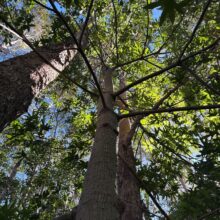
Hidden among the rainforest-covered slopes of south-east Queensland, the Critically Endangered Ormeau Bottle Tree (Brachychiton sp. (Ormeau L.H.Bird AQ435851)) survives in just a small part of the Darlington Range. Habitat loss and isolation have left this species at risk of extinction.
Despite the recent discovery of new young trees, concerns remain about their genetic health, with some struggling to survive to maturity. With the remaining populations small and spread out, we aimed to understand whether breeding among closely related trees and limited movement of pollen/seeds between populations were affecting the species’ ability to recover.
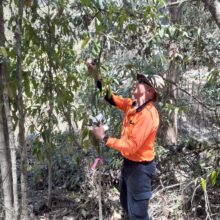
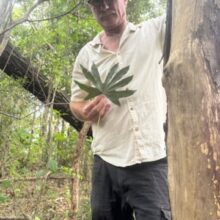
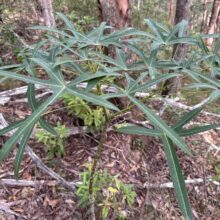
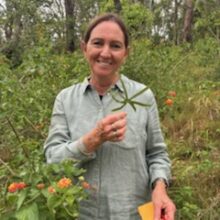
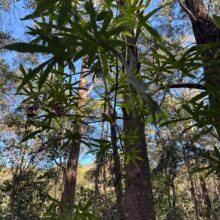
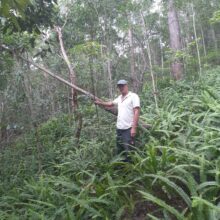
In 2025–26 our Genetics in a Bottle Project brought community volunteers and conservation scientists together to collect leaf samples from wild, planted and conservation collection trees across the northern Darlington Range in Queensland. These samples formed the basis of a conservation genetics study designed to better understand the species’ diversity and support its recovery into the future.
Why genetics?
A conservation genetics study was the best way to find out:
- how closely related bottle tree species are, and whether the. Ormeau Bottle Tree is crossing with other species,
- what genetic diversity remains within and between the Ormeau Bottle Tree’s wild subpopulations,
- how isolated subpopulations reproduce and establish new plants in the wild, and
- what conservation managers can do to conserve the species.
Results from DNA analysis can then guide decisions about which individual trees to protect, propagate and include in future restoration activities for the species.
How we cracked the code
Volunteers from North East Albert Landcare collected leaf samples from wild subpopulations, isolated wild trees and cultivated trees. The Queensland Herbarium and Biodiversity Science team then analysed the DNA, comparing relationships within the species and with other bottle trees.
Collect
260 leaf samples collected from wild and planted bottle trees, with important data recorded
Sequence
DNA testing (DArTseq genotyping) revealed genetic differences and relationships between trees
Analyse
The results were translated into practical recommendations for conservation and recovery
What did we find?
Explore the key findings from our project
A tree of its own
Analysis confirmed the Ormeau Bottle Tree is a distinct evolutionary lineage, supporting its recognition as a separate species.
No cross-breeding
The study did not detect any hybridisation with closely related bottle trees (like B. rupestris) that grow in the same area, meaning the species’ unique genetic identity remains intact.
Wild diversity persists
Wild adult trees hold high levels of genetic diversity. The largest subpopulation contains the most, while the north-eastern subpopulation has distinctive variation.
A patchwork of populations
The three wild subpopulations are not genetically identical. Some are closely connected, but the north-eastern group appears more isolated. Protecting different family lines is vital to recovery of the species.
The seedling surprise
Many new juveniles outside the main wild populations, along with many cultivated trees, descend from just two original mother trees that self-pollinated. These have low genetic diversity which may explain low survival.
Missing genes in cultivation
Most existing cultivated & translocated collections capture only a small part of the remaining wild genetic diversity. Seed collections will need to be made from a wider range of unrelated parents to be an effective safety net.


A genetic roadmap for recovery
The study identified the following future actions to conserve the species:
1) Protect every sub-population
Safeguard all three wild subpopulations and valuable outlying mature trees. Together, they represent important remaining diversity within the species.
2) Genes to the rescue
Consider genetic rescue, a process that introduces carefully selected pollen or plants from other subpopulations, creating seedlings with a better chance of survival.
3) Build a better backup
Establish genetically representative ex situ collections using carefully selected seed and cuttings. Drawing on a range of wild parent trees will help conserve more diversity.
4) Choose wisely
Use genetic findings to guide future propagation and restoration, rather than relying heavily on closely related seedlings or the same few parent trees.

Help us make the next discovery
This study has given us a clearer picture of how to protect one of Australia’s rarest trees. With your support, we can help deliver more research and practical conservation projects for threatened native plants across the country.
Conservation is a team effort
Genetics in a Bottle shows what becomes possible when local knowledge, specialist science and generous community support come together.

Queensland Herbarium
Conservation genetics specialists coordinated testing, analysed the DNA and prepared the final scientific report, with substantial in-kind expertise.

North East Albert Landcare
Volunteer field teams collected leaf samples, recorded field observations and helped connect this research with the local community.

A generous private donor
Philanthropic funding provided through the Australian Seed Bank Partnership made the genetic research possible.
Project photos by North East Albert Landcare and Jarrah Willis
Check out some project posts