Supported by the Australian Governments Saving Native Species Program, the Securing the Future project aimed to prevent extinction and improve the trajectory of 10 threatened plant species by delivering a comprehensive program of seed collecting, germination trials, propagation, translocations, research and long-term seed banking of native flora from SA, Vic & WA.
Project Aims
South Australia
- Seed collection and habitat survey for the Arckaringa Daisy (Olearia arckaringensis).
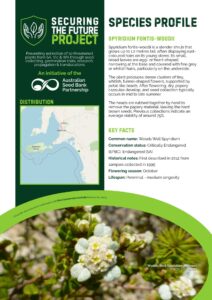
- A wholistic seed collection-to-translocation project (including habitat survey and improvement) for the Woods Well Spyridium (Spyridium fontis-woodii) in collaboration with First Nation and community rangers.
Victoria
- Genetic research into the Forked Spyridium (Spyridium furculentum) to understand the diversity in existing seed collections.
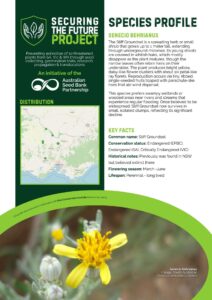
- Seed collection and germination trials for the Stiff Groundsel (Senecio behrianus).
Western Australia
- Seed collection, germination, translocation, seedling imagery and soil seedbank research for Foote’s Grevillea (Grevillea calliantha).
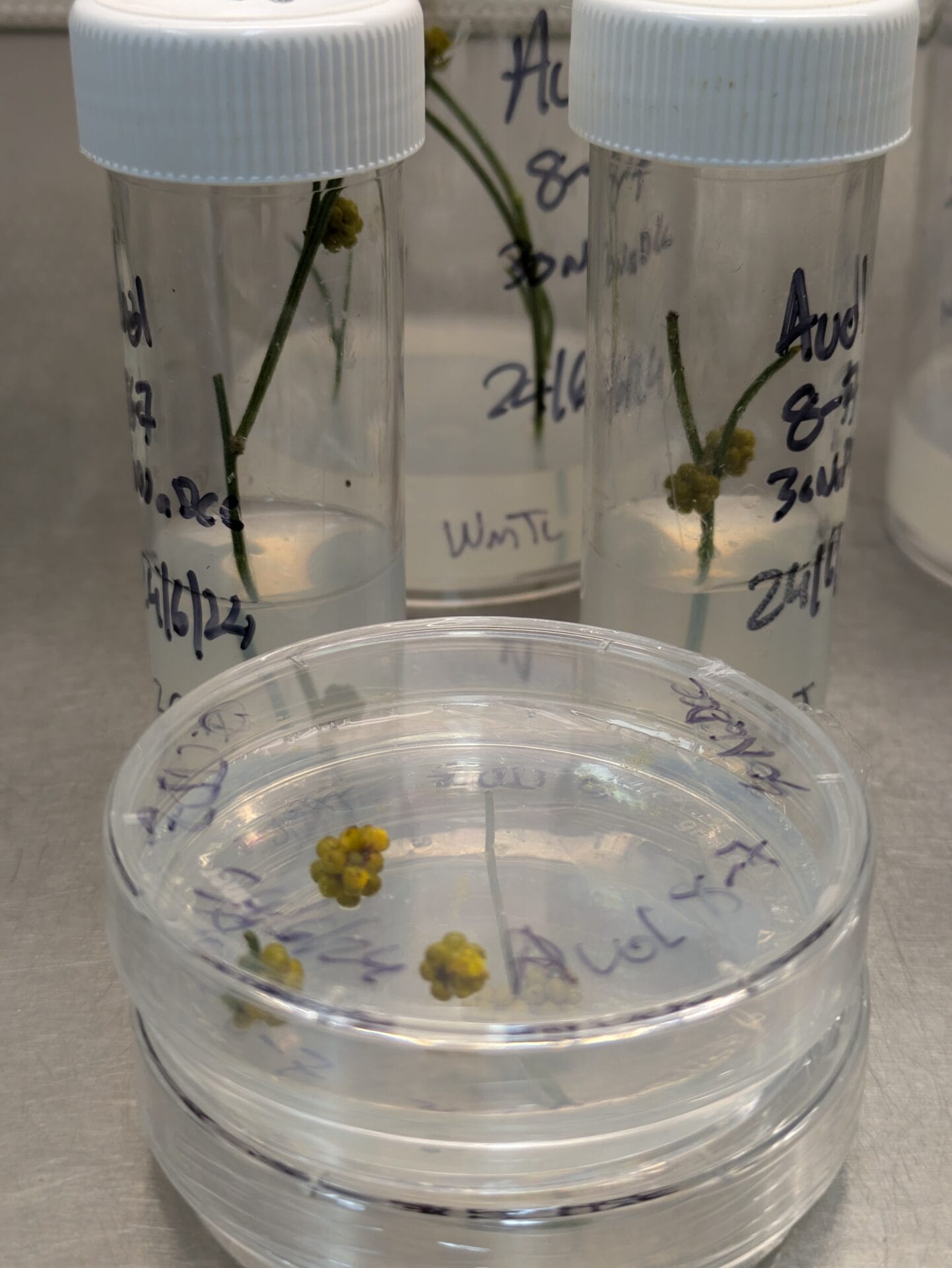
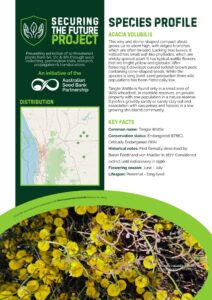
- A collection, propagation and seed production project for the Tangled Wattle (Acacia volubilis) including research into genetic lineages, tissue culture and cryopreservation protocols.
- Seed collection and seedling imagery of the Giant Andersonia (Andersonia axilliflora).
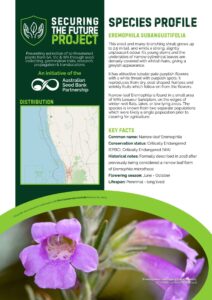
- Seed collection, germination, seedling imagery and translocation of the Narrow-leaved Eremophila (Eremophila subangustifolia).
- Seed collection and seedling imagery of the Small-flowered Snottygobble (Persoonia micranthera).
- Seed collection, germination and seedling imagery of Wongan Eriostemon (Philotheca wonganensis).
Project outcomes
Through seed banking, science and collaboration, our Securing the Future Project has helped safeguard ten priority threatened Australian plant species for generations to come. Key outcomes include:
9 threatened species secured in conservation seed banks or living collections
1,100+ plants grown for translocations of 3 threatened species
6 threatened species with new germination knowledge unlocked
Genetic analyses completed for 2 threatened species to guide future conservation strategies
Seed & seedling imagery captured for 5 threatened species to enable early-stage field identification
Tissue culture & cryopreservation protocols developed for 1 threatened species
Field surveys completed for 2 threatened species, delivering new condition and distribution information
Seed Production Area established for 1 threatened species
Securing seeds for the future
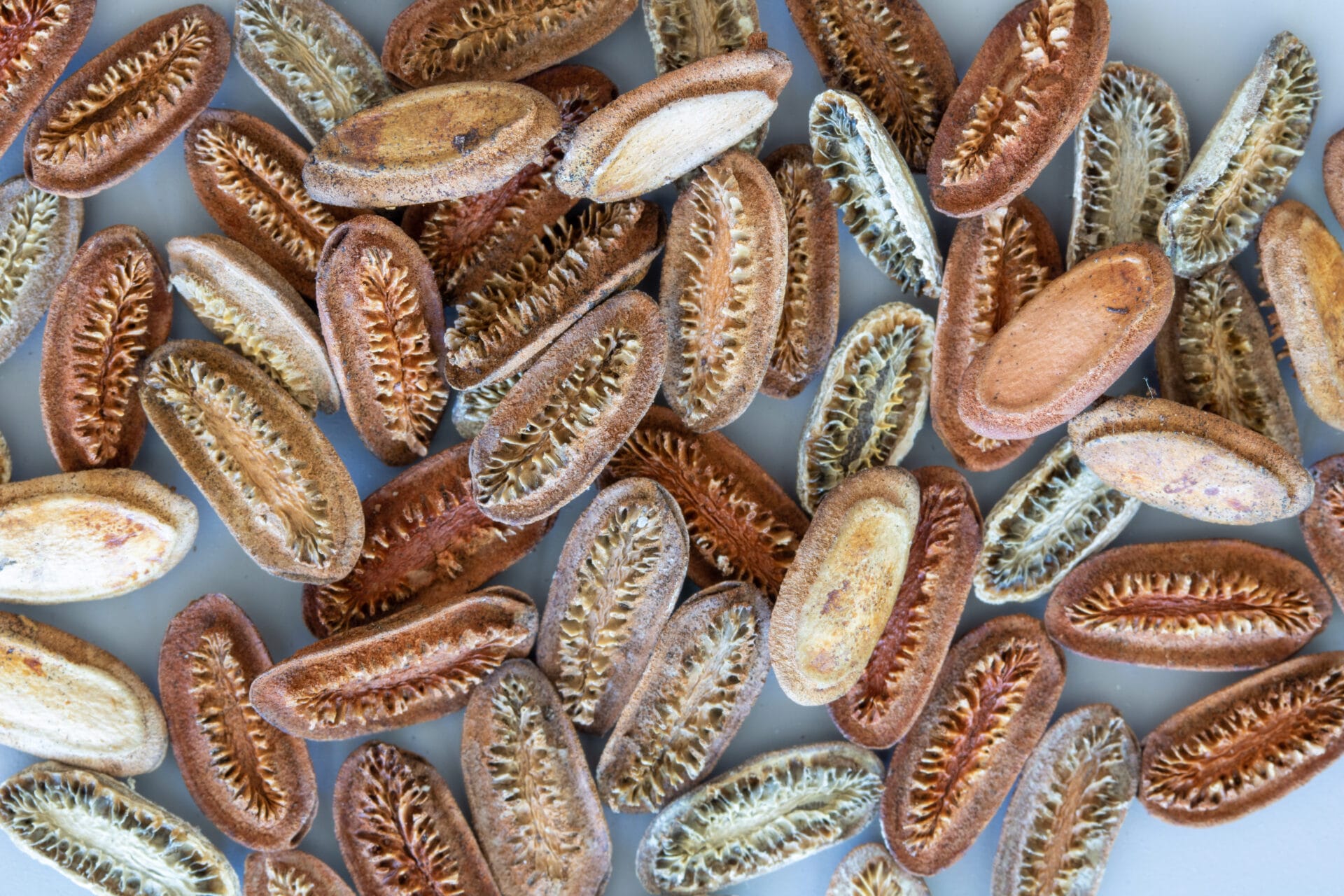
Seeds and cuttings were collected for nine threatened species and safely stored in conservation seed banks and living collections. These collections act as an insurance policy, protecting genetic diversity and supporting future restoration if wild populations decline.
Science into solutions
Germination trials, genetic studies, targeted lora surveys, seedling imagery and soil seed bank research filled critical knowledge gaps for multiple species. New insights now guide how these plants can be grown, managed and restored more effectively.
For the Tangled Wattle, new tissue culture and cryogenic storage techniques were developed, and a seed production area was established. Genetic material from wild plants is now safely stored long-term, providing a powerful safeguard against extinction.
Restoration and habitat impovement
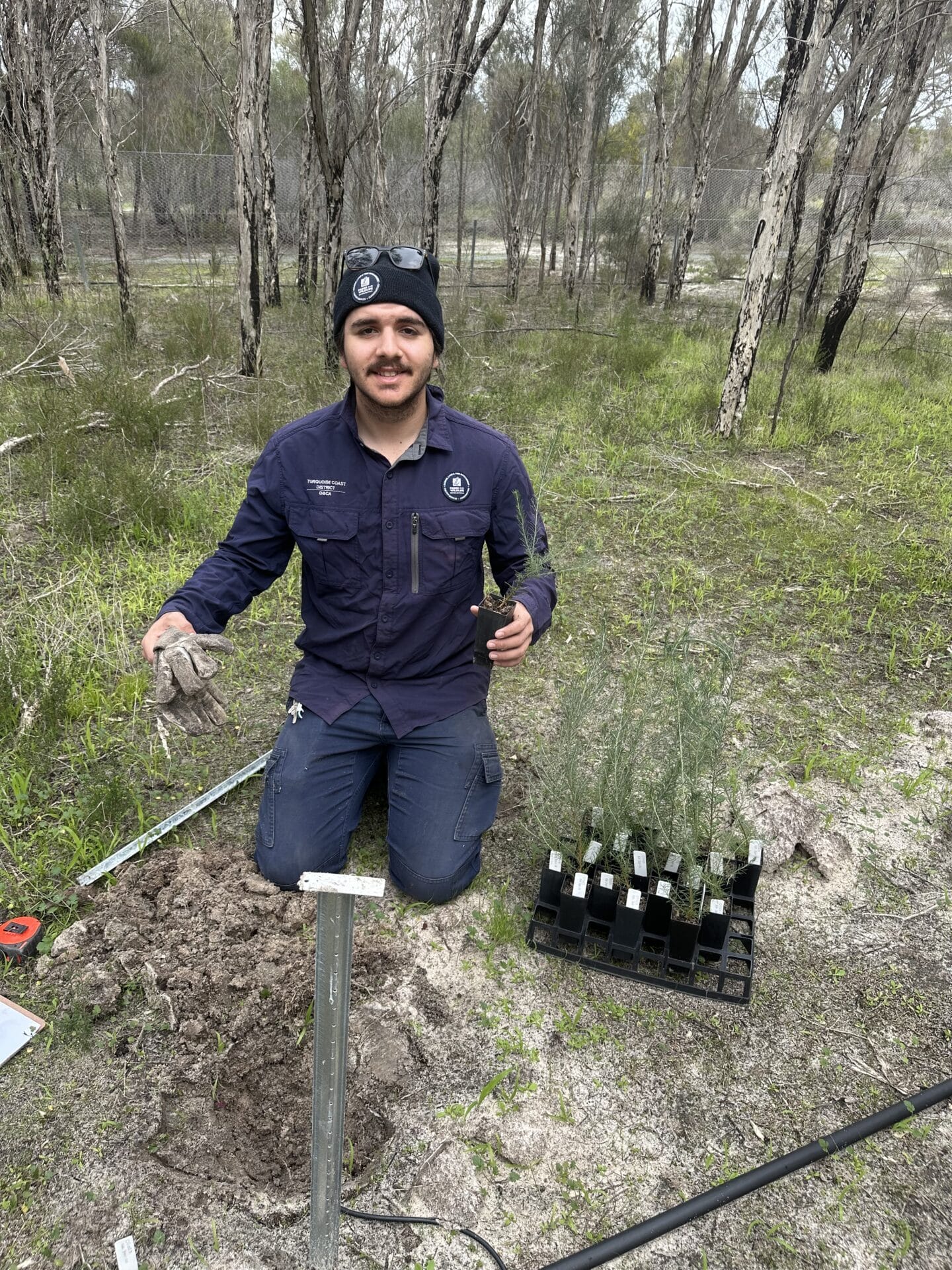
Translocations were completed for Woods Well Spyridium, Narrow-leaf Eremophila and Foote’s Grevillea. More than 1,100 plants established across multiple sites, directly increasing population size and reducing extinction risk. Habitat improvement trials for Woods Well Spyridium explored pathways to encourage natural recruitment.
Working together for conservation
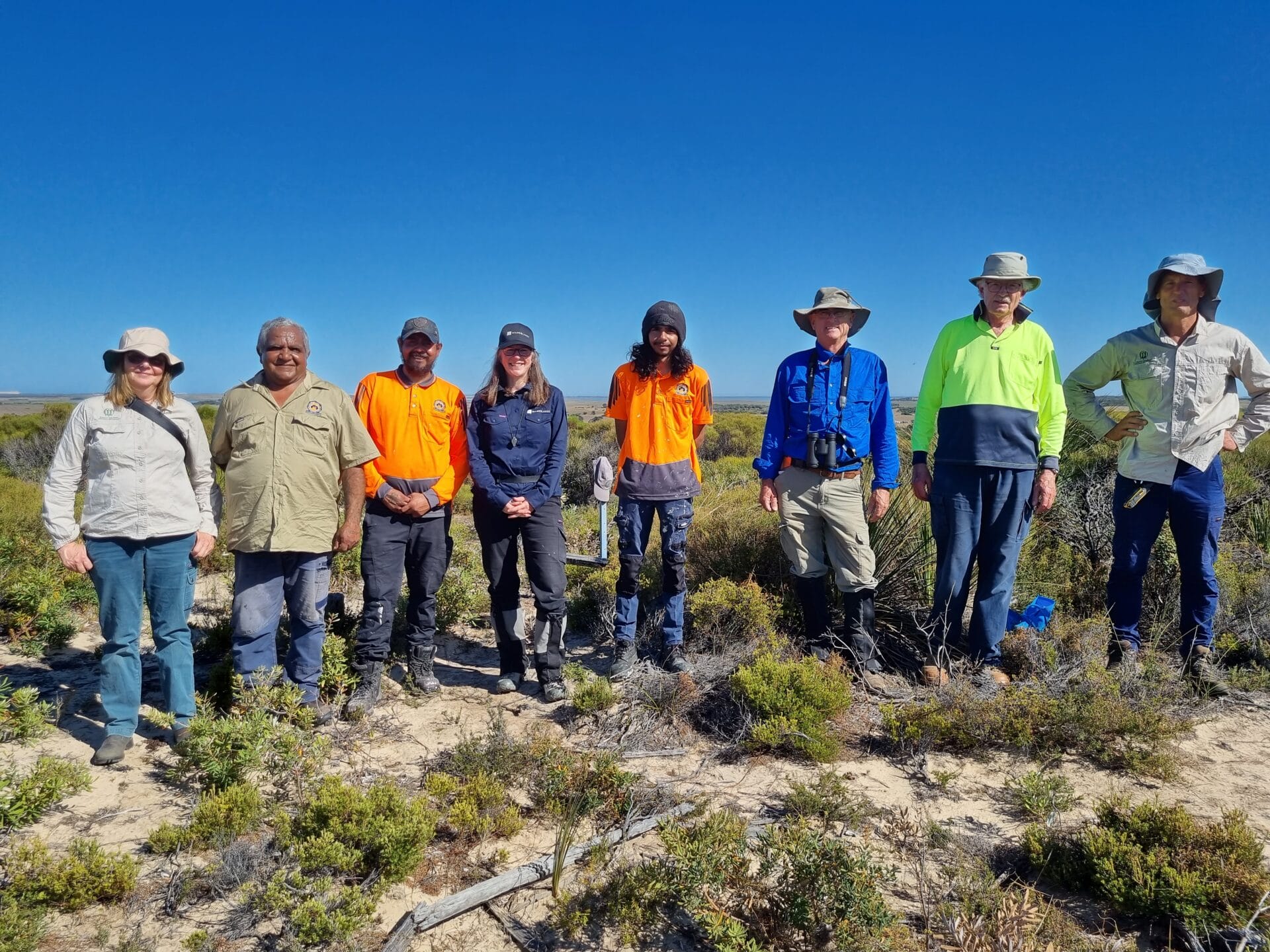
The project was delivered through strong collaboration between conservation seed banks, First Nations peoples and groups, government agencies, researchers, land managers, community organisations, nurseries and private landholders. Together, these partnerships strengthened conservation outcomes and built shared capacity to protect threatened plants into the future.
Resources
Learn more about our target species. Click the images below to download species profiles.
Arckaringa
daisy
Footes
grevillea
Narrow leaf
eremophila
Stiff
groundsel
Tangled
wattle
Woods Well
spyridium
Watch some project videos
Acknowledgements

We acknowledge the support provided for this project by the Australian Government’s Saving Native Species Program. Funding was provided under the Priority Species Grant that aimed to improve outcomes for priority plants from the Threatened Species Action Plan.
We also thank the key conservation seed banks and organisations who delivered our project:
Western Australian Seed Centre, Kensington
Department of Biodiversity, Conservation and Attractions
South Australian Seed Conservation Centre
Botanic Gardens and State Herbarium of SA

Victorian Conservation Seedbank
Royal Botanic Gardens Victoria